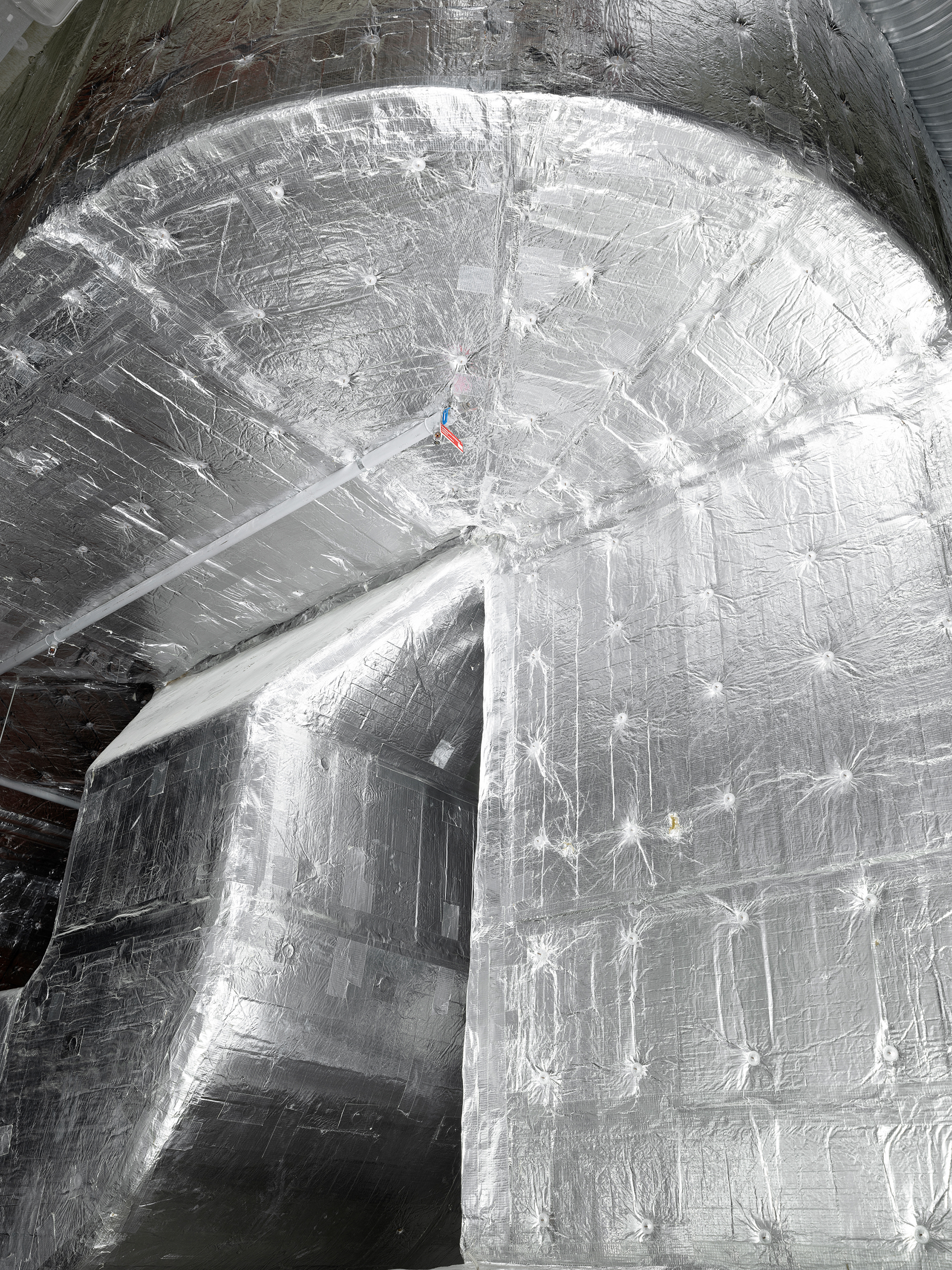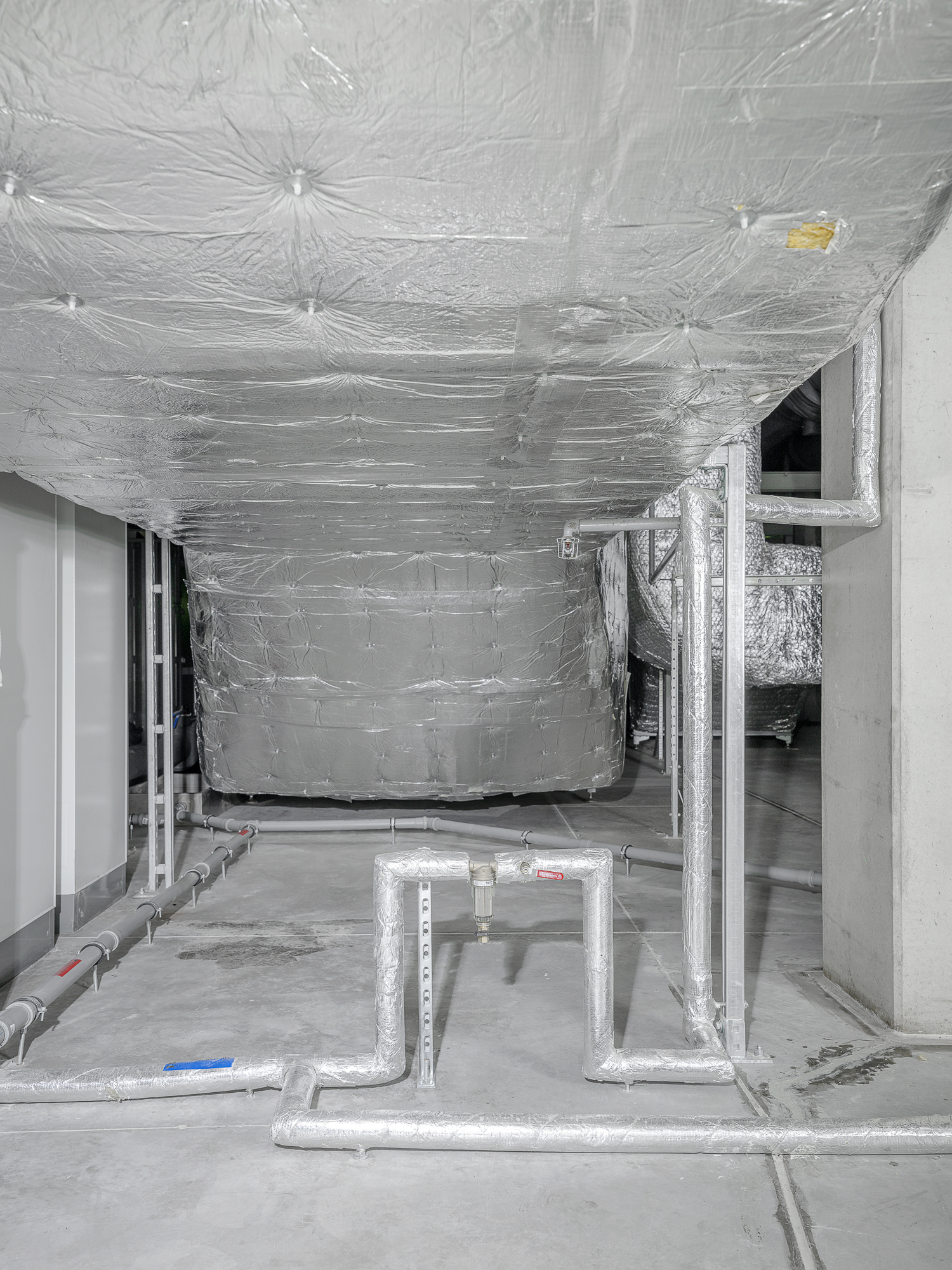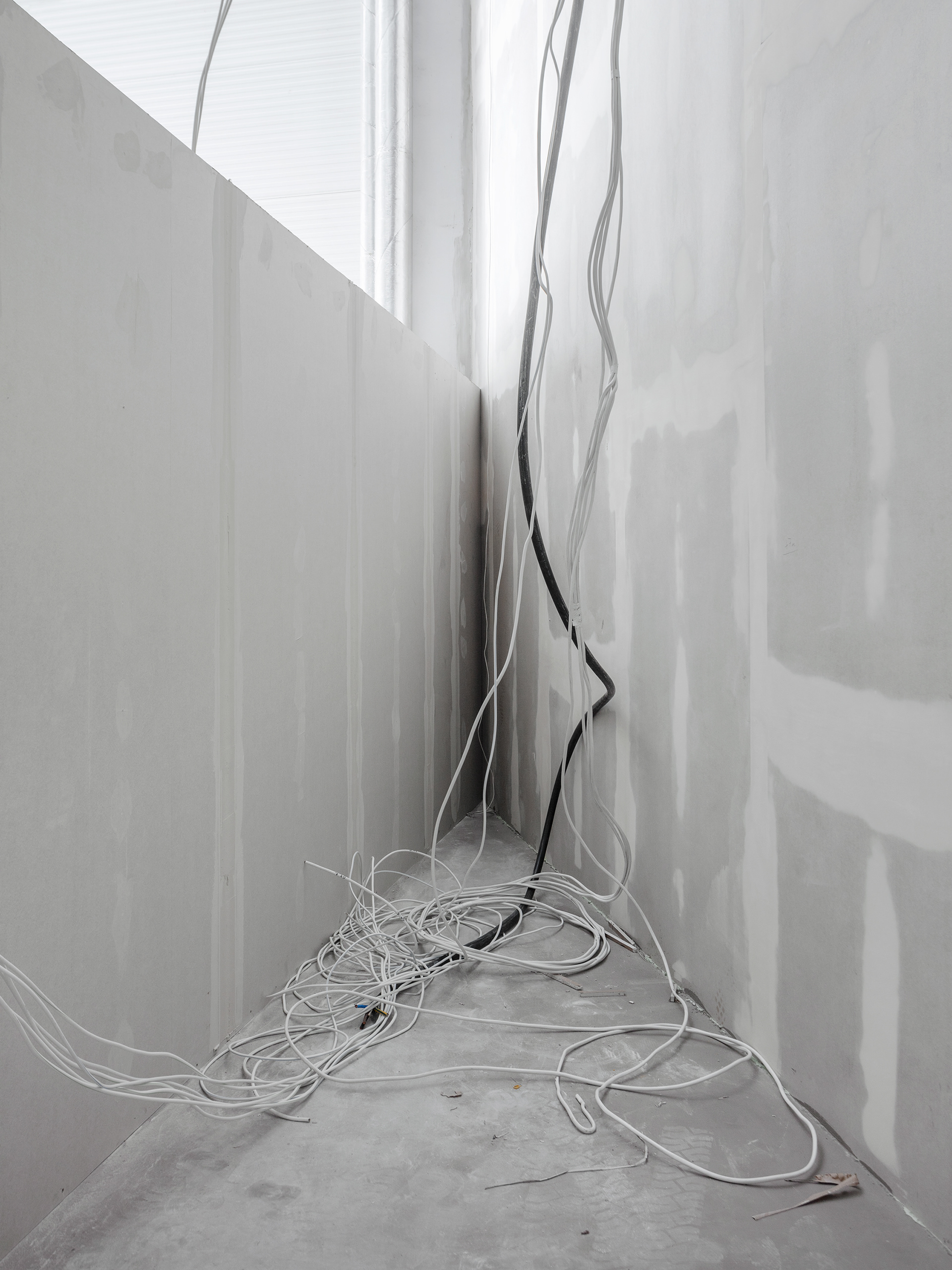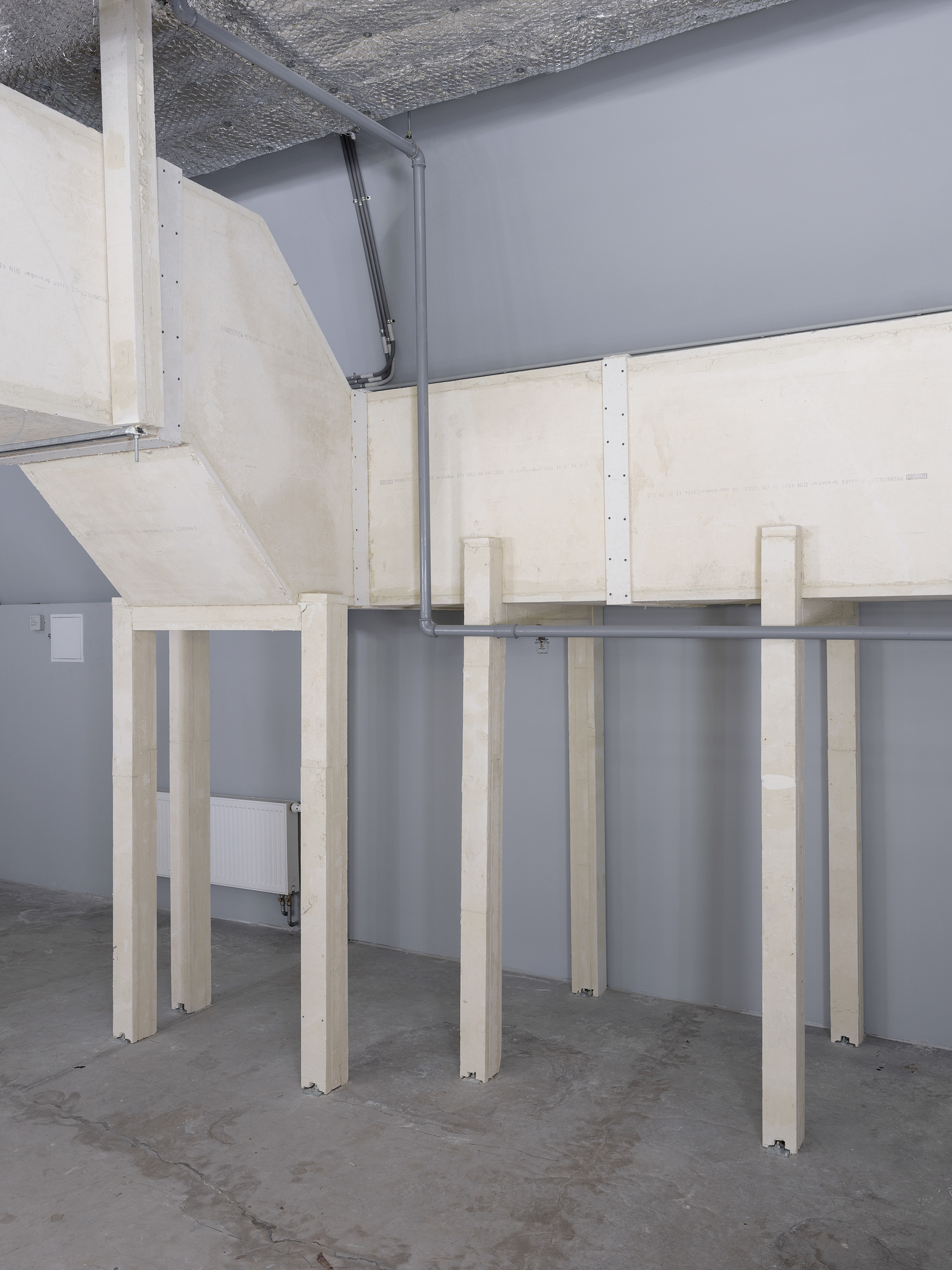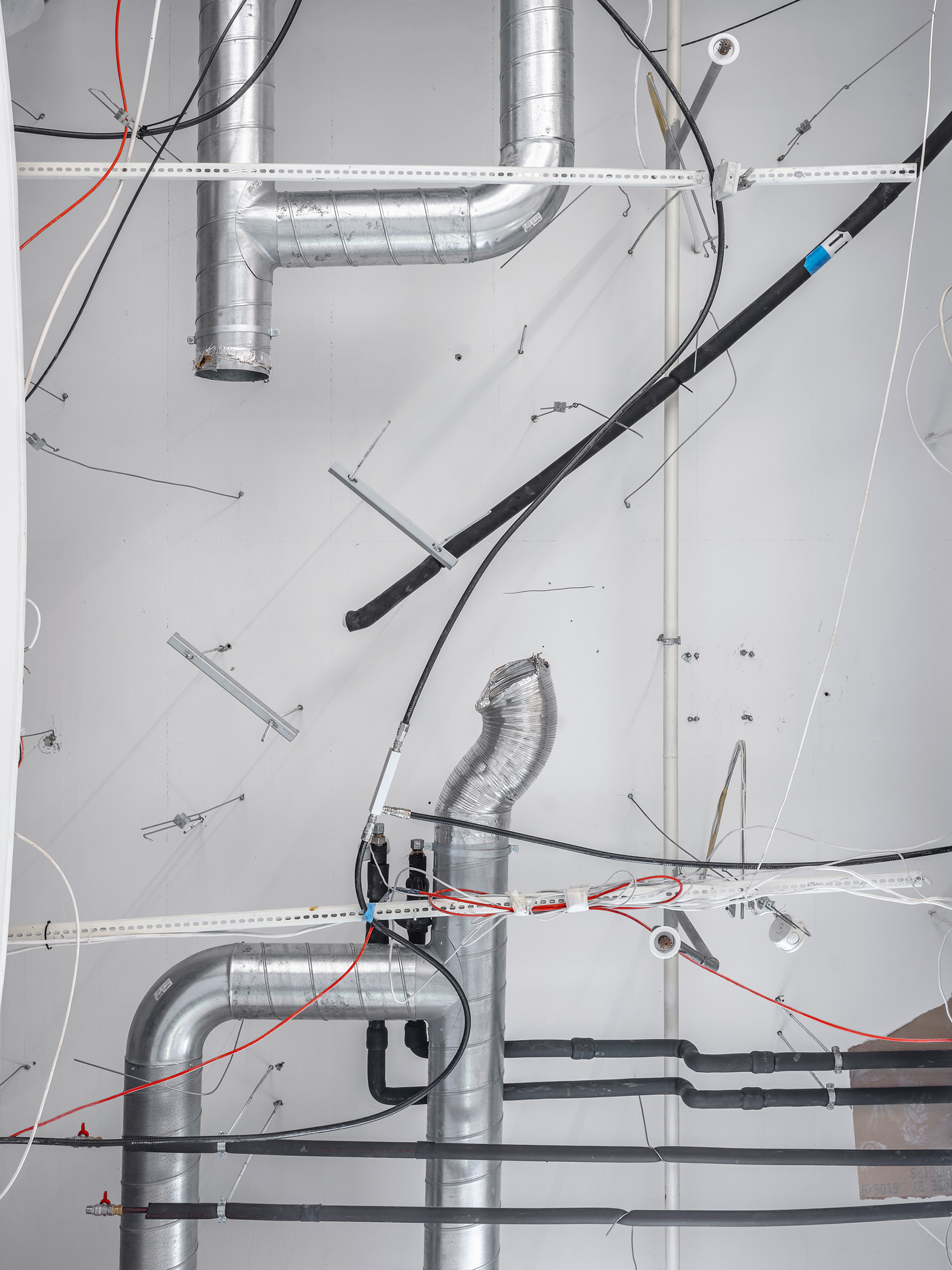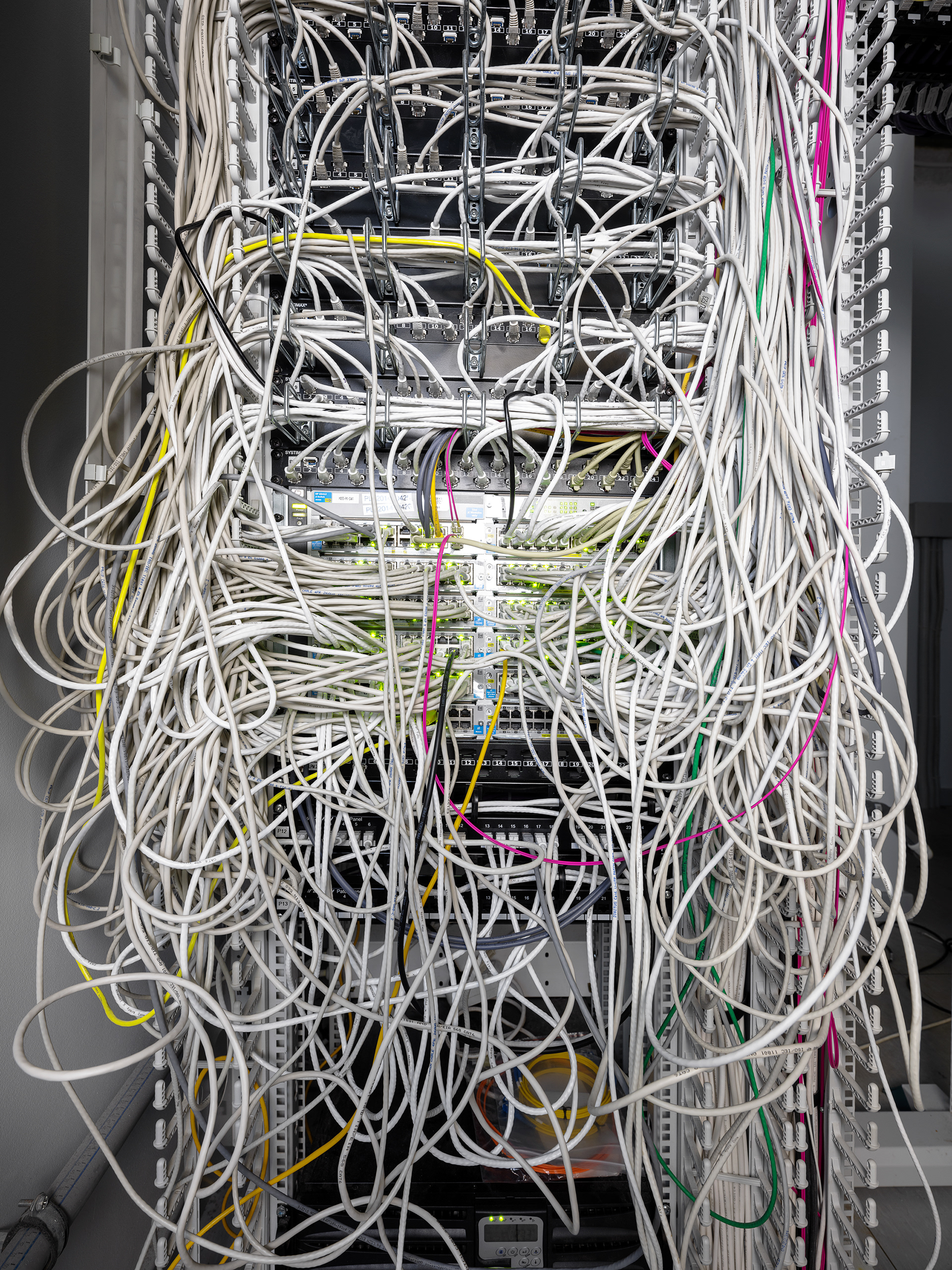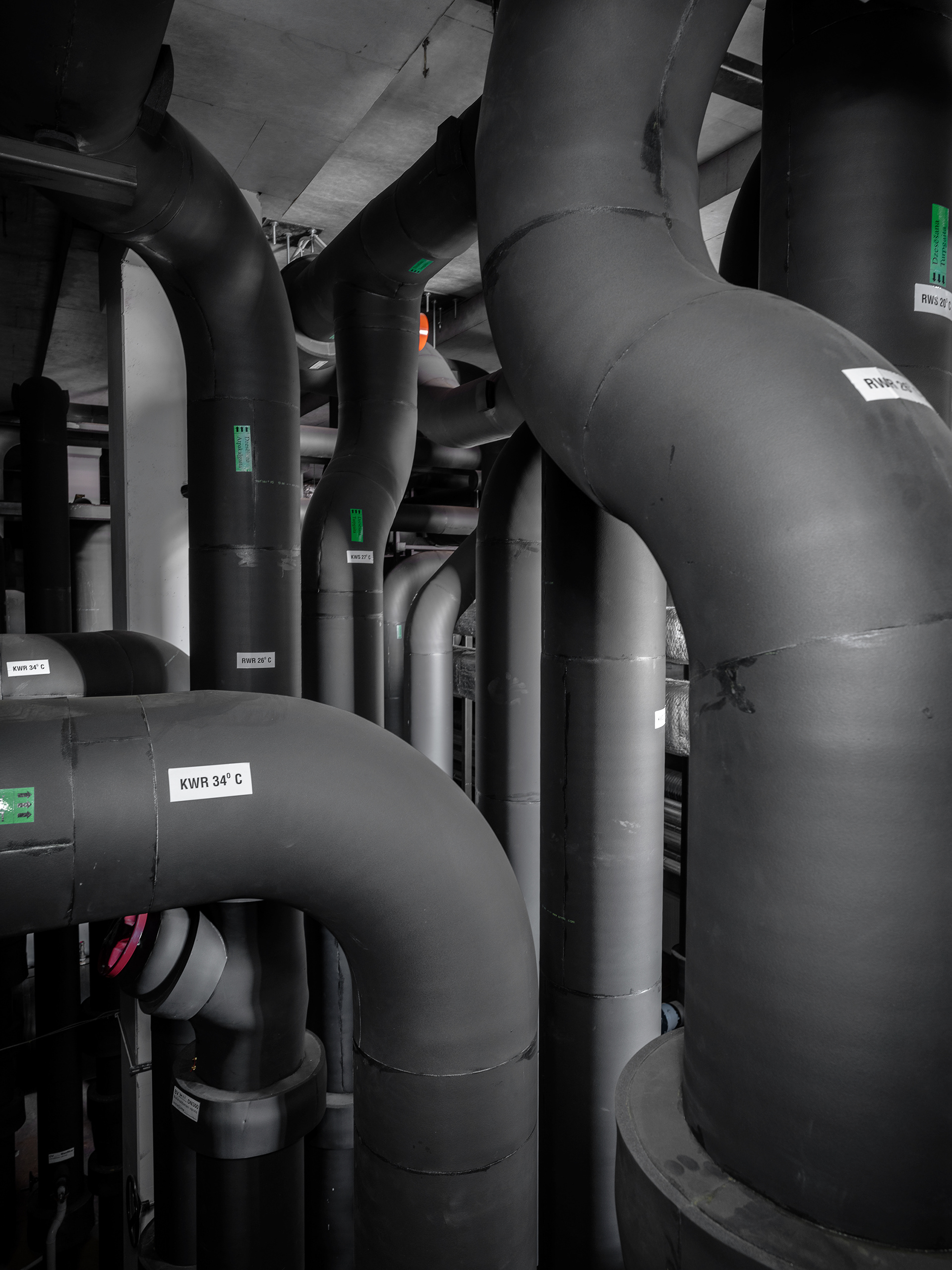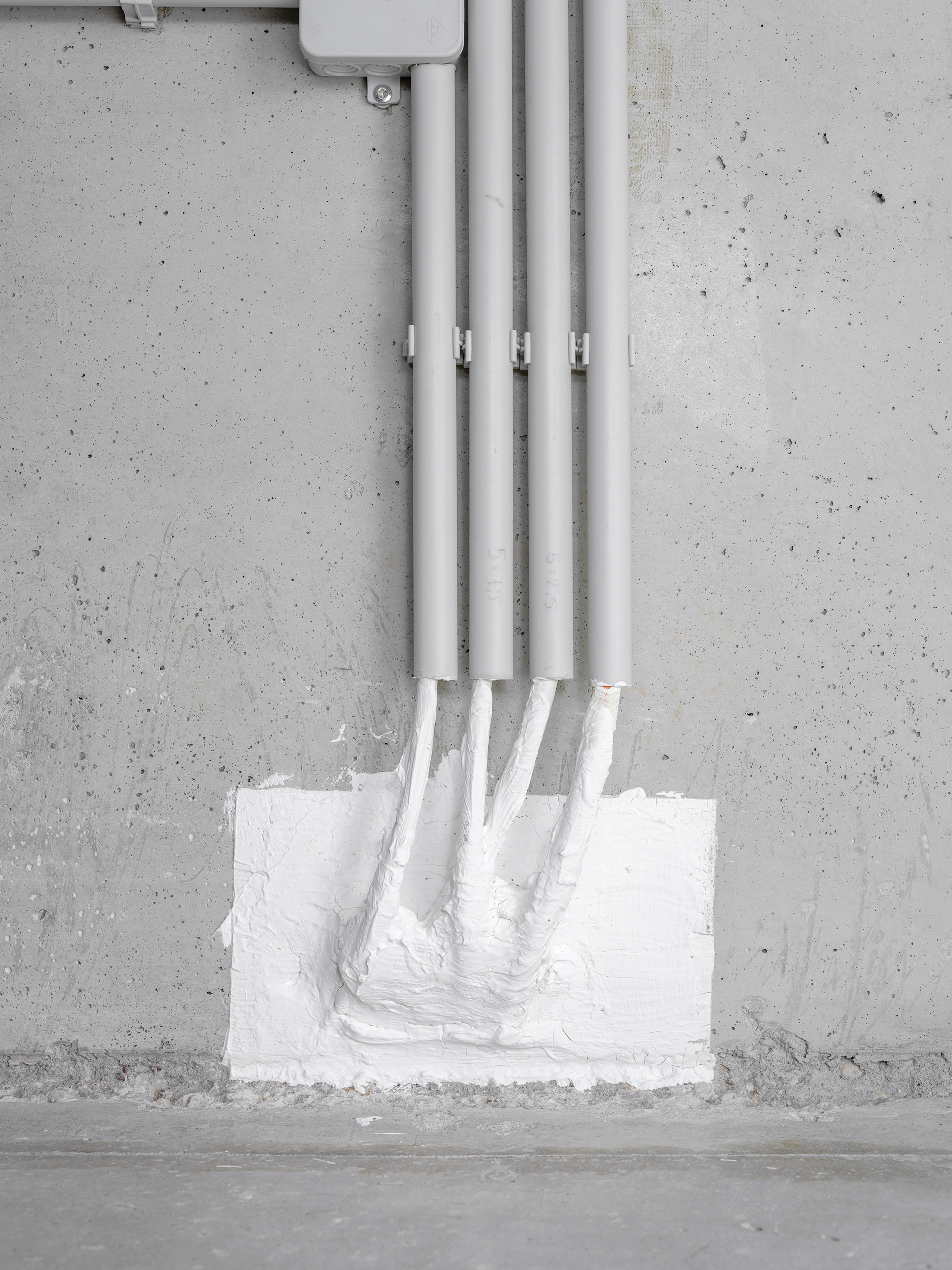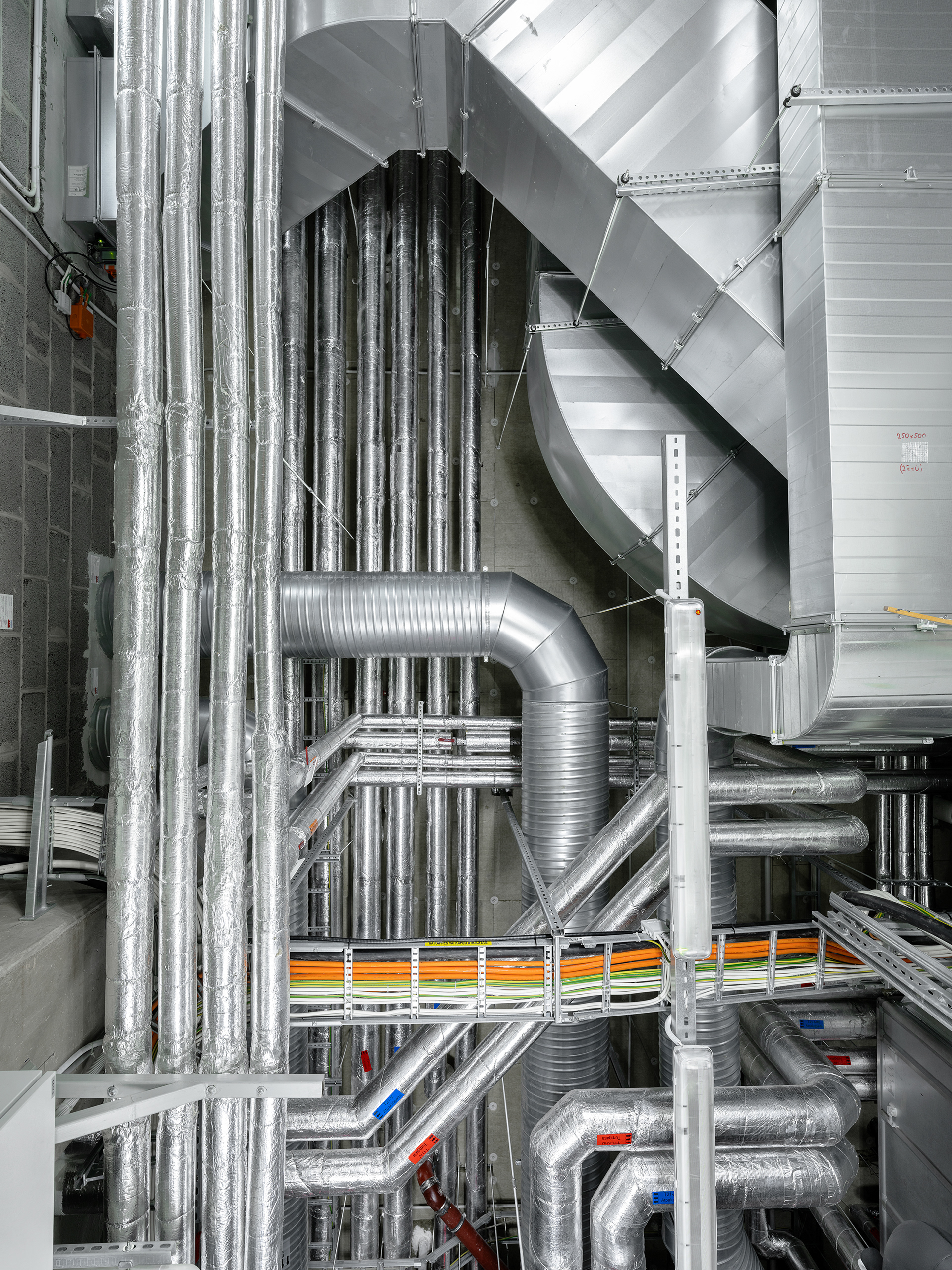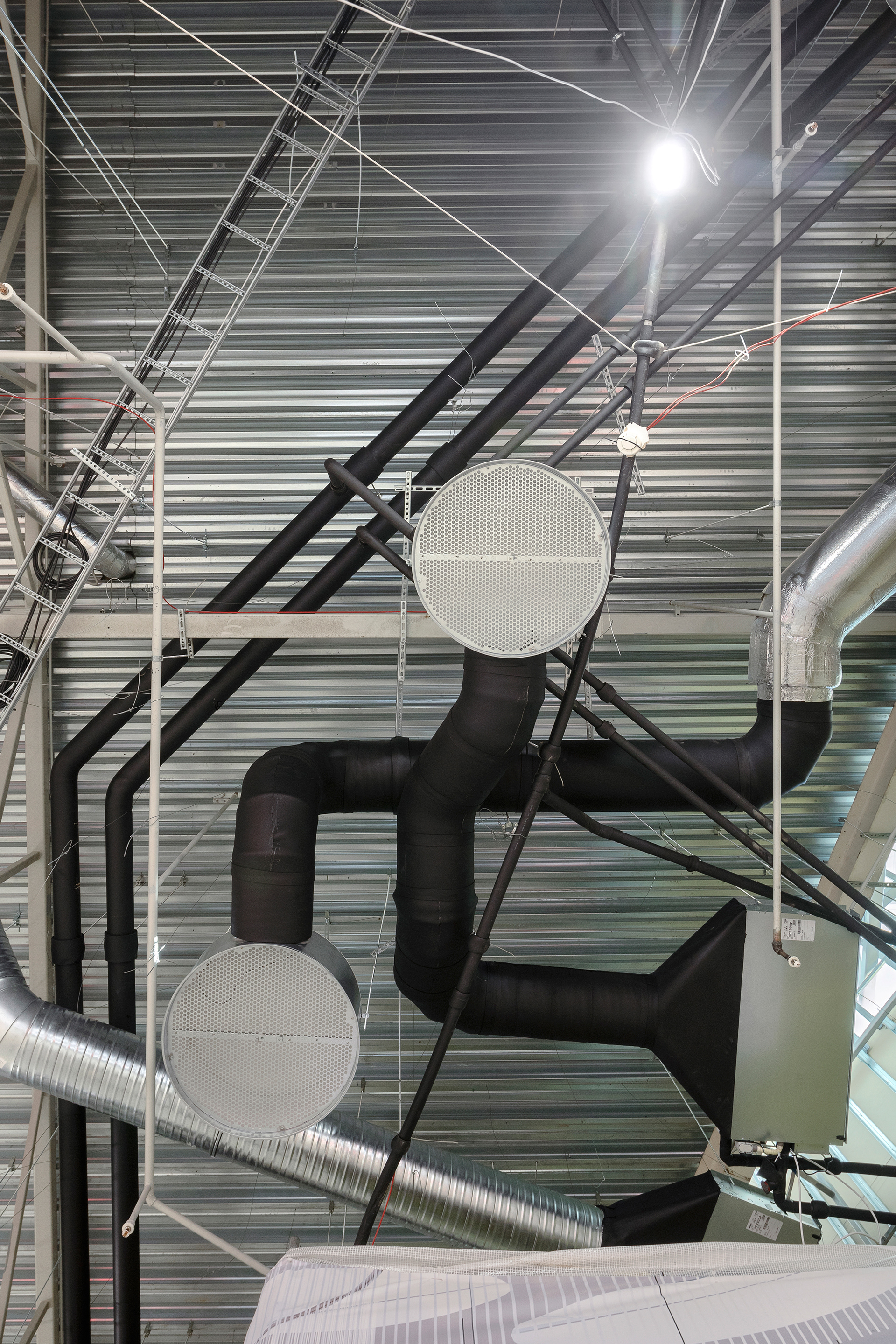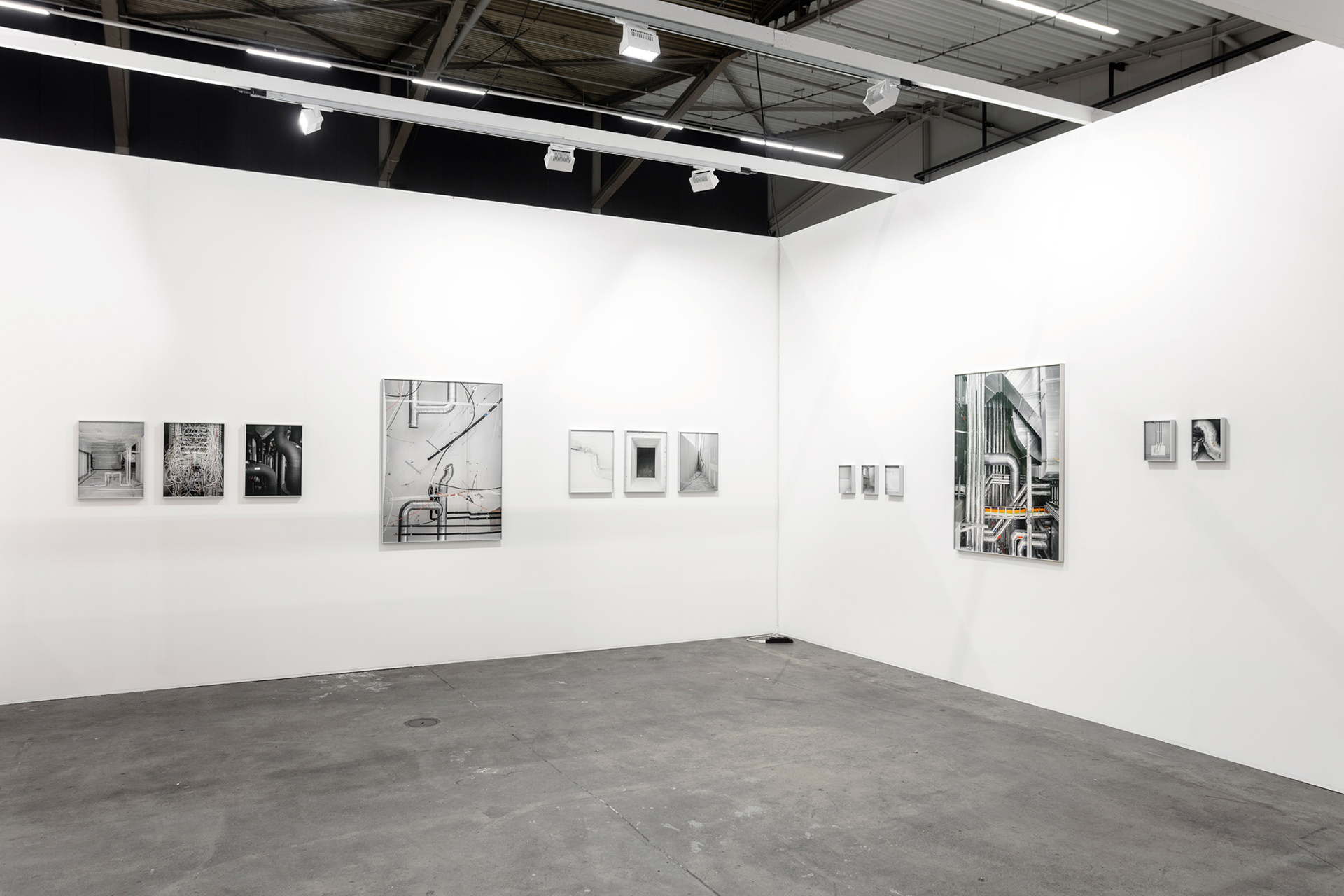
These are spaces not meant to be seen – yet without them, a city cannot function. Service corridors, boiler rooms, utility shafts, pumping stations form the hidden framework, the silent bloodstream of urban life. They manage flow, control access, and embody an invisible logic of power.
Though often appearing chaotic or absurd, the tangled pipes and infrastructural voids follow their own internal order. As media theorist Brian Larkin writes, infrastructure is not just a technical system – it is a cultural form that shapes how we live, perceive the world, and understand society. Wires and cables are more than conduits for energy or information; they carry political, social, and aesthetic messages, defining who is included or excluded from essential services.
Infrastructure exists in a state of muted visibility – usually unnoticed until it breaks. Power outages, burst pipes, or system failures reveal the fragile systems we depend on. Philosopher Susan Leigh Star calls this moment of breakdown an “infrastructural revelation,” when the hidden becomes visible and the everyday becomes exposed.
These systems are not neutral. For some, they are reliable and seamless; for others, irregular, fragile, or out of reach. This inequality is not just material – it is deeply social.
Infrastructure is also a promise: a vision of progress, inclusion, and normalcy encoded in cables and pipes. But where access is partial or always “almost there,” this promise becomes a politics of waiting. We may not fully grasp the logic behind these systems – yet we rely on them. In their cold precision and quiet absurdity, these structures often appear inhuman. And yet it is precisely in their flaws that they reveal a surprisingly human face.
Many thanks to the Latvian National Museum of Art, the National Library of Latvia, and the Latvian National Opera and Ballet for granting us access to their facilities and infrastructure.
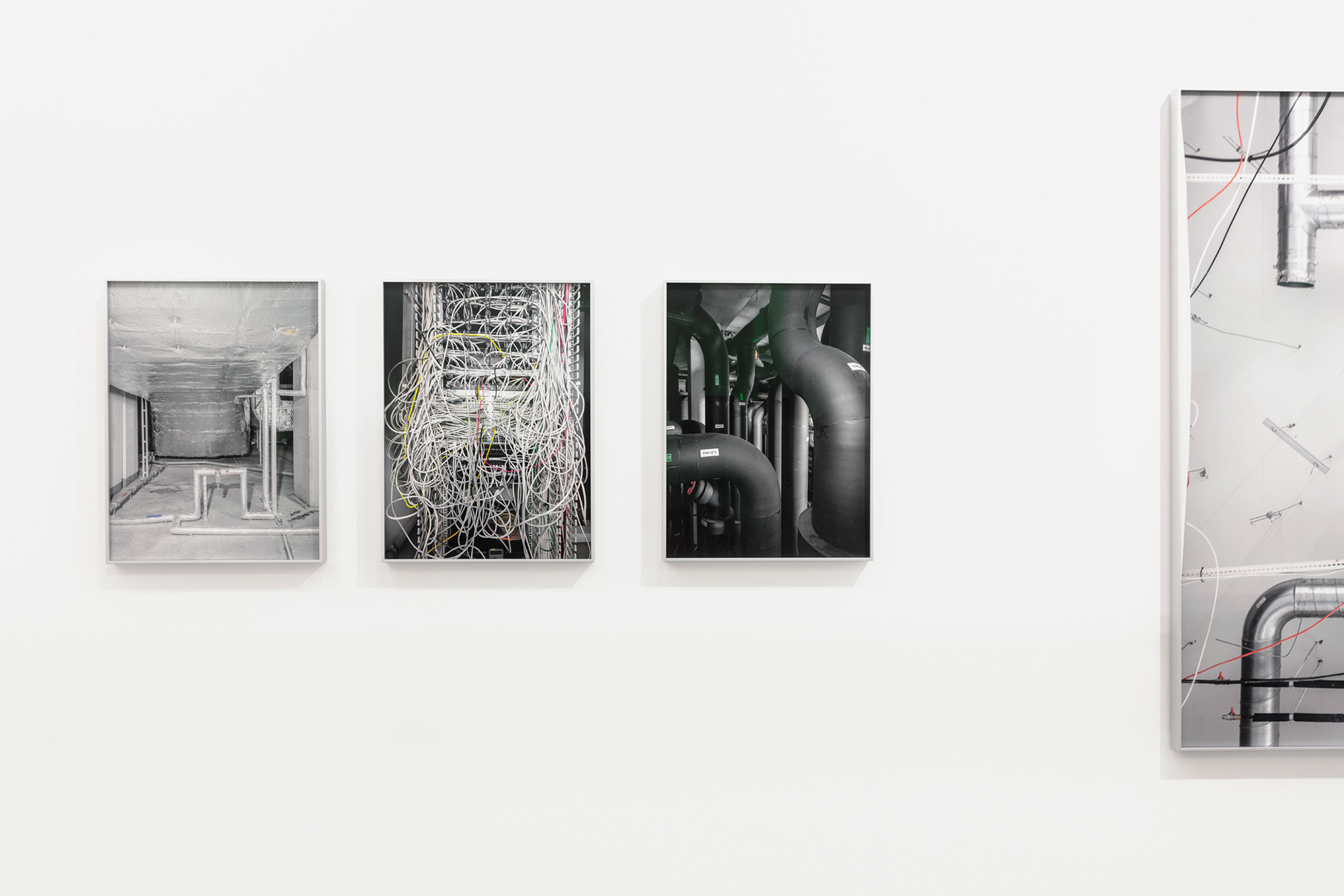
“Room Nr.13 II” at Unseen Photo Fair during Rotterdam Art Week 2026